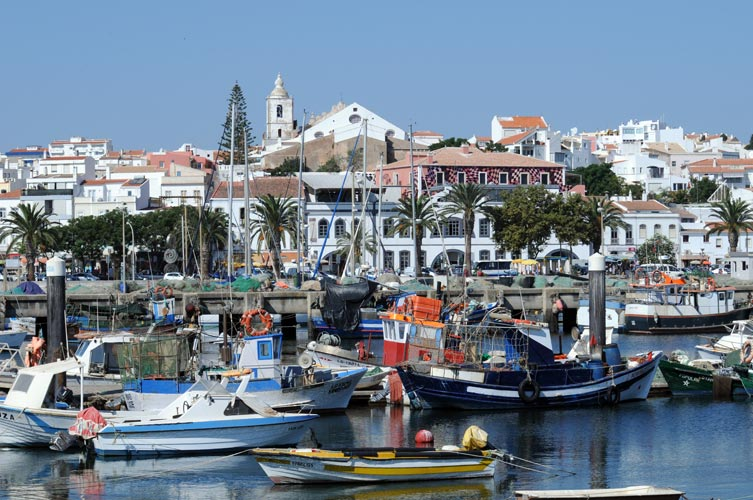
On November 1, 1755, a massive earthquake struck Portugal. In Lisbon alone an estimated 60,000 people perished. Lagos, the then capital of the Arlgarve was also severely impacted, not only with the loss of human life but also the loss of its status as capital city of the Arlgarve an honor held since 1576, which moved in 1756 to Faro. This may not have been an entirely bad thing (obviously not for the residents at the time, I hasten to add), but the result has been that Lagos was not over developed in the 20th century. Some remnants of pre-1755 city walls remain together with a few buildings and artefacts, but most of the old town is 18th century. There are no high rises (although much, mostly residential development is going on) and it retains an ‘end of the line’ charm. The railway network stops here, the motorway network stops here, so unless you are a surfing buff headed to the west coast in your VW campervan with a fully laden roof rack (of which there are many), the people here are not passing through, they are here because it is the desired end point. About 22,000 people (including us) live here.
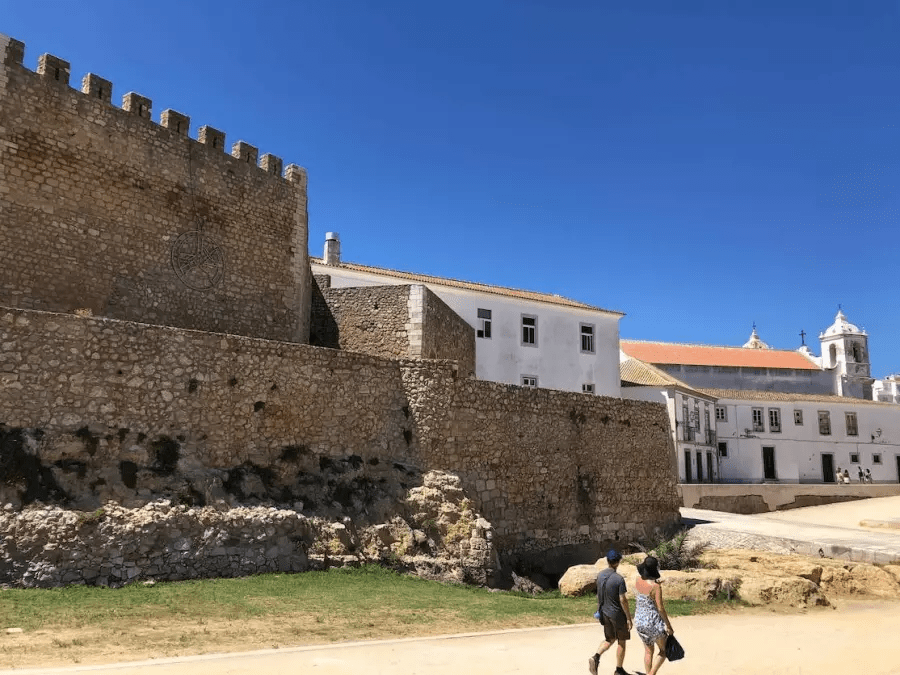
Lagos’ position at the bottom left hand corner (South West, to those with a geographical bent) of The Iberian Peninsular and indeed Europe, coupled with a large natural harbour at the mouth of the Bensafrim river meant that the Romans, Moors, Spanish and others considered it of strategic importance and all fought over it and consequentially contributed to a colourful history. Henry the Navigator lived here and during his time, the first European forays into North Africa were launched from Lagos, the Lagos adventurers were the first of many in the ‘Age of Discovery’, which culminated in the Spanish doing the first Atlantic crossing of the modern age, finding the western version of the Indies (Amerigo Vespucci came a few years later) and the Portuguese colonisation of chunks of Africa and Kerala/Goa in India. Vasco da Gama (see previous blog) was a also participant in the age of discovery. Lagos became a European trading centre for all things African; from ivory to slaves; thankfully no more, but it was the wealth of these endeavours that resulted in Lagos becoming the capital of the Arlgarve until it all came tumbling down on Nov 1, 1755.
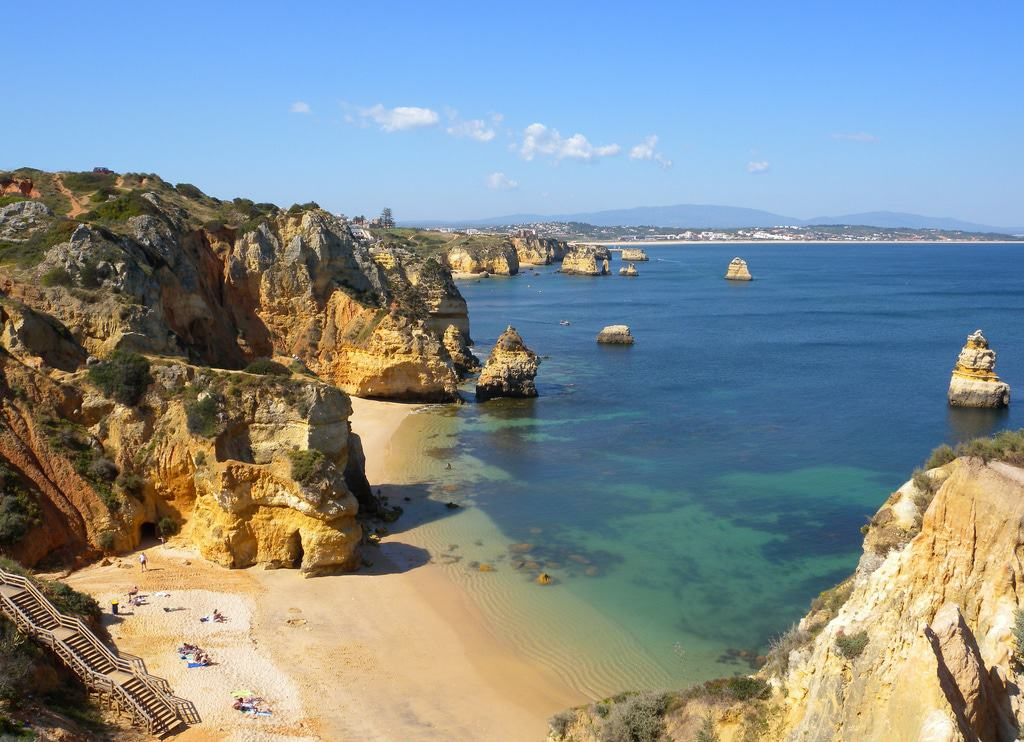
Today, Lagos is a very laid back, un-pretentious town with a slight hippy feel to it. It has spectacular beaches. Meia Praia is 6km of golden sand with the cooling Atlantic, ideal for walking the dog and dropping into one of the nicely scattered independantly run beach bars for a cold beer (there are no restaurant chains here). It has a town full of history and character with a great variety of restaurants and bars. There are some spectacular cliffs and coves.

It also has a modern marina, which is a ‘sailing’ marina full of people who are using wind power to take them on their own personal vogages of discovery and adventure. If you want to meet people who are doing a circumnavigation, or just a transatlantic crossing, in a racing regatta or even dropping in on their way fron Northern Europe to an extended sailing cruise in the Med, then they are all here and the conversations about where people have been and how to/not to do it abound. The flags on the boats are Swedish, Canadian, Australian, British and many, many more … Lagos has great winds for sailing and 3,100 hours of sunshine per year (factor 30+ required) but due to the Atlantic waters, it never gets too hot and by the way, the seafood is excellent. The sky is mostly a deep shade of blue and there are a number of great courses for the bogey golfer.
From Lagos marina, we will launch our own voyage of discovery and adventure … our first planned trip is east into the Med in July.

 Sea Star goes South
Nicely written piece James which has left me wanting to visit Lagos in the not too distant future (when airports and airlines get their act together!!). Meanwhile I’m heading to Bracknell tomorrow to meet with Lori and Simon …
Enjoy!
LikeLike